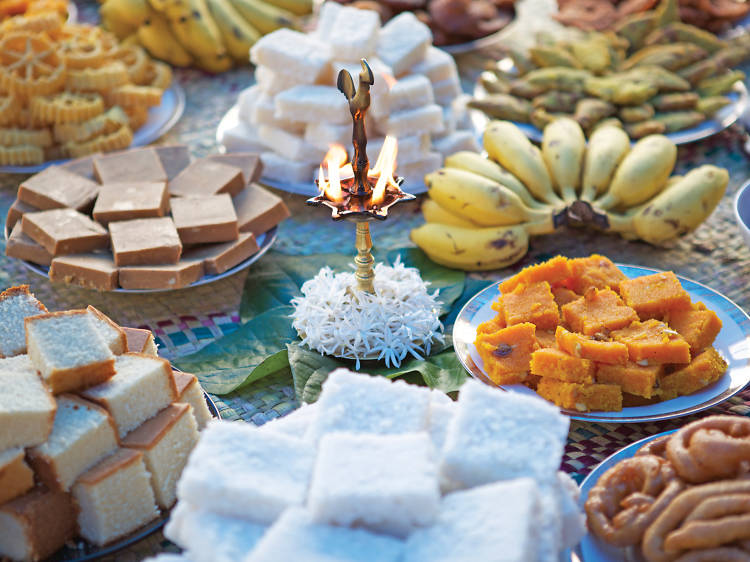
Ayubowan!

Sinhala and Tamil New Year in Sri Lanka: A Celebration of Renewal and Harmony
Beyond the familiar chiming of midnight on December 31st, Sri Lanka awakens to a New Year steeped in profound cultural significance and vibrant traditions. The Sinhala and Tamil New Year, known affectionately as Aluth Avurudda and Puththandu, is not just a date on the calendar; it’s a deeply ingrained cultural festival that paints a unique portrait of Sri Lankan identity. Spanning several days, the intricate rituals woven into this celebration offer a stark and captivating contrast to conventional New Year festivities worldwide.
What sets this Sri Lankan New Year apart is its profound connection to the rhythms of nature and ancient astrological wisdom. As the island nation basks in the peak of fertility during March and April, nature unveils its bounty – a vibrant tapestry of blossoming flowers and ripening fruits. This period also witnesses a surge in animal reproduction, marking a season of renewal across the natural world. Coinciding with the sun’s northward journey around late March or early April, the Sinhala and Tamil New Year transcends a mere symbolic transition; it heralds a truly meaningful dawn for all life on Earth.
At its core, the timing of this auspicious celebration rests on a scientific foundation, meticulously calculated according to age-old astrological traditions. It marks the precise moment the Earth completes its celestial dance around the Sun. In an era of groundbreaking technological advancements and the relentless search for life beyond our planet, this alignment serves as a powerful reminder of the unique miracle that is “Puthuvi” – Earth – and its delicate position within the vast cosmos. The transition of the Sun from the zodiac sign of Pisces to Aries is revered as the pivotal “New Year’s Eve” within Sri Lankan culture, a cosmic event holding deep spiritual significance.
This celestial transition is marked by a distinct interim period known as “Nonagataya.” During this neutral phase, all worldly activities cease, and a sense of spiritual reflection prevails. Sri Lankans traditionally engage in religious observances, allowing the mind and body to harmonize in anticipation of the approaching New Year.
The arrival of the New Year, or “Sankrantiya,” is greeted with joyous anticipation. The very first ritual to unfold is the lighting of the hearth, traditionally carried out by the matriarch of the household. This symbolic act signifies the dawn of prosperity and the preparation of the first auspicious meal of the year.
Following this, a sequence of propitious times is observed for commencing work, engaging in trade, and partaking in the first meal – activities often led by the father of the family. This tradition beautifully symbolizes the renewal of economic endeavors and the promise of a prosperous year ahead.
Beyond the familial rituals, the Sinhala and Tamil New Year bursts forth in a kaleidoscope of communal celebrations across Sri Lanka’s diverse provinces. Vibrant folk dances, exhilarating traditional games, and melodious folk songs fill the air, showcasing the rich cultural heritage of the island.
For those considering a journey to Sri Lanka, or those who have already experienced its allure, the period between April 11th and 15th offers an unparalleled opportunity to immerse oneself in this unique cultural spectacle. Witnessing the intricate rituals and the joyous communal spirit of the Sinhala and Tamil New Year promises a truly unforgettable and enriching travel experience, unlike any other.
Join us again as we unveil another invaluable gem of Sri Lankan culture, a landmark cherished by many worldwide, awaiting your discovery.
#SriLanka #CulturalFestival #NewYear #Travel #Asia #Tradition #ExploreSriLanka #AluthAvurudda #Puththandu #CulturalExperience #TravelsAmo

Leave a Reply